200km around Regent’s Park

So, after a few lazy days, I had to catch up big time on this year’s Festive 500, so, in a moment of utter stupidity, I decided to try and cycle 200km around Regent’s Park. My aim for this ride, alongside completing the festive 500, was to try and see how long I could go between breaks on the bike; I aimed for 4-hour stints followed by 5 minutes off the bike. This may seem fairly brutal, but it was made far easier by the number of traffic lights around the park, providing intermitant, momentary stops where you can unclip and recover. On the open road, I’d likely need to reduce the length of the stint, at least until I build a greater tolerance to being on the bike for that amount of time.

The biggest battle on this ride was nutrition. I seem to forget to eat on these rides and end up feeling pretty wobbly by the end of the day. I was also concerned about comfort, having made a few changes to my bike fit to get into a more aerodynamic position (although still quite relaxed).

The ride

The ride started at 8:00. Not an early start. I left the house and tentitively rode towards Regent’s Park, trying to resist the temptation to sprint over every single rise like I normally would. The journey there was wonderfully smooth and relaxed, I didn’t get stopped at any traffic lights. Upon arriving at Regent’s Park, I began the ride averaging around 28-30kph moving speed for each lap. This intensity was chosen based on my heart-rate, aiming to keep it in zone 2. One of the most important lessons of this ride was that if your doing a long ride somewhere you normally would do shorter, faster rides it is very easy to get carried away near the start. A heart rate monitor here can be invaluble as it ensures you will pace your ride correctly.

The first 100km went pretty smoothly, I was able to follow my fuelling targets and averaged around a 27kph speed (including rests). After a brief lunch stop, I got back onto the bike and felt strong, really strong. I got a little carried away and was averaging about 32-35kph around the park, which was not a good decision in the long run. This was another lesson I learned from this ride – stick to pacing targets throughout the day, not just at the start. On a ride like this, the final 50km or so is easy to neglect, afterall, you’re 75% done, but it’s extremely easy to bonk and forget about pacing and nutrition, only to arrive home a complete mess.

A friend joined me at the 160km mark and kept me going for the last 40km. Top notch chat made the final 40km fly past and before I knew it I was leaving the park and riding home. A casual ride up Swain’s Lane finished off the ride, followed by a short ride home.

Setup, Changes, and Lessons Learned

In terms of bike, I rode my Giant Defy 1, a well made endurance bike. I opted for the aluminium version, over a older carbon version, primarily due to the added durability an aluminium frame provides. On an endurance ride, you will invetiably have to attach a few bags, fix things without a torque wrench, and sadly abuse the bike a little. It’s also a little tricky to be super careful when you’re absolutely exhausted. This led me to conclude a metal frame was a better choice. Sadly, titanium was out my price range, and steel was too heavy, so I chose to use aluminium. The Defy seemed to be one of the most comfortable aluminium frames, so I chose it and it hasn’t let me down. The ride quality is really comfortable, it smooths out bumps and quietens road buzz. Additionally, it doesn’t slow me down when I put the hammer down – I can comfortably tick along at around 40kph without putting in too much effort. A really outstanding bike!

I ran two bags, a small saddle bag with repairs, and a top tube bag to carry some water. The saddle bag worked well, but I didn’t like the top tube bag. It rocked from side to side a little when standing up so became a little annoying. I think I will mount a bottle cage on the downtube to avoid needing to have to carry water like this.

I really wished I’d had a set of aerobars fitted too. Having another aerodynamic position to ride in would have been extremely useful. Also, I found myself wishing I could take some pressure of my hands at the 6 hour mark.

An additional change that I’m going to make before my next long ride is to switch to a set of 28mm tyres. The added comfort and grip that these would provide would be extremely useful and would enable me to extend my stints between stops.

Alpkit Definition Long Term Review

The Alpkit Definition is by no means new. It was released a few years ago and has been widely reviewed by people far more knowledgeable than me. I still feel like another long term review can help potential buyers decide whether to invest in this jacket, so I decided to write one.

Fit

The fit of this jacket is on the athletic side – there is no loose or excess fabric when you move around and it does not ride up badly when your arms are above your head if you are scrambling or climbing. The length of the jacket is very good for me, but some hillwalkers might find it a little short. The fit in general is definitely aimed more at the climber and scrambler than at the pure hillwalker (although it still works fantastically well for hillwalking).

Compared to my other waterproof, the Mountain Equipment Lhotse – the fit is very similar and just as good. This is an indication of the amount of research and time that Alpkit put into the definition jacket, after all, the Lhotse is widely regarded as having one of the best fits of any mountaineering jacket.

The hood is very good, although I think it isn’t the best I’ve seen. It’s quite small when compared to the Lhotse’s hood (although the Lhotse’s hood is absolutely massive), still big enough to fit a helmet under, but it doesn’t quite offer the protection of some hoods. This does have one key advantage, visibility is not affected by the hood. My Mountain Equipment jacket makes it rather difficult to see out of when I’ve got the hood fully tightened, I’ve never had this problem with the Alpkit.

Fabric

The fabric is excellent. The waterproofness is very good, and so is the breathability. Despite this, modern Gore-Tex Pro does take the edge in my experience, offering slightly better breathability. The difference in performance is so small that it’s only noticeable as I switch between the jackets on a regular basis.

Pockets and Vents

The pocket placement on the Definition is generally very good. They are all accessible when you have a backpack on. The two hand-warmer pockets are well-sized, but I think the chest pocket could be made bigger – it only fits my phone.

Alpkit have gone for an unusual setup for the vents – opting for two vents just below the armpits. They work well, and are definitely easier to use than traditional pit-zip style vents, but they’re not quite as effective and getting rid of heat.

To conclude, the Alpkit definition is an outstanding jacket. The performance isn’t quite on par with top of the line jackets, but when you consider the considerably lower cost of the Definition, it’s performance is genuinely outstanding.

Bike Setup for Endurance Rides

This post talks a bit about my endurance bike setup. This is what I’d take on rides that are above 100 miles in length without any support.

The Bike

I ride a Giant Defy 1. It’s an aluminium framed road bike with Shimano 105. I chose an aluminium frame overa carbon frame to ensure it’s durability. This is a bike that has bags strapped to it, is put in cars, is ridden all year, and ridden an a lot on the trainer, so I thought that an aluuminium frame would be far more robust than a carbon one. I opted for the Defy as it’s geometry is really suited to endurance riding, with a relaxed riding position and absolutley amazing comfort – I can ride over terrible rides and feel completely comfortable on this bike.

Despite this, it has some cons. First and foremost, it’s not the stiffest frame, although, between my pathetic sprint and low weight, I rarely notice this. It’s also not the lightest at 8.5kg with a couple of upgrades, which isn’t terrible, but it’s not quite on par with some more expensive endurance road bikes.

A sunny start to a 140 mile ride

One of the wonderful things about endurance cycling is the bike will rarely hold you back. Provided it’s comfortable for you, very little else matters. In my experience, the best way to go faster is to ride more and stop less. It’s all very well being on a stiff aero bike, but if you’re in pain after 8 hours, all of the efficency gains will soon be lost as you will need to stop to rest far more. Don’t let your bike stop you from riding your bike far!

Nutriton

Nutrition is paramount on very long rides. Food, after all, is fuel. On my rides, I try to eat something every hour, be it a bar or a gel. I find this manages to keep the dreaded bonk at bay for long enough.

My favourite on the bike foods are flapjacks. They’re simple, tasty and, most importantly, have lots of calories. I also reinforce this with gels when I feel a bonk is approaching, but I try to avoid these as they don’t sit so well in the stomach on very long rides.

One bit of advice I would give is to avoid any new items of food on the day of your big ride. I made the mistake of switching to a different brand of gel on the day of a very long ride and was really uncomfortable after about 8 hours on the bike.

I bring 2x750ml bottles with water in them. I’ve tried with a few energy supplements and I haven’t found one that suits me yet. I find this gives me enough water for just under 100km, which is enough for most rides where it’s easy to refill, but it has caused me issues before. This year, I’ll try to add a third bottlecage behind the seat to enable me to do longer stints between shop stops.

Endurance riding gets you up early. This was just before a half everesting on Swain’s Lane in London

Bags

I use a few different bags on my bike on any ride logner than 100 miles. My favourite bag is an Alpkit top-tube bag. It’s simple, big, and allows me to store food and essentials close to hand on the ride. Additionally, it holds a powerbank really nicely so I can charge my GPS if I need to.

I also use a small seatpack which holds all of my tools and spares alongside a few emergency gels just in case I bonk really badly. This almost always stays on the bike.

Cycling Futher

Over the last 6 months, I’ve really focussed on pushing my cycling endurance. I’ve learned a lot in that time and made plenty of mistakes, in this post, I try and give some advice on how to start cycling further.

Goal Setting

Goals are essential to your motivation. It’s a lot easier to pull yourself out of bed at 6AM on a Saturday morning if you know exactly what your doing it for. Additionally, they help give some structure to your training as you can make your training more specific; if you know your aim is an everesting, long, flat rides might not be as useful as slightly shorter, but more hilly rides.

I think it’s essential to be ambitious with your goal setting – even if it seems impossible know, if your really want to do it, with focus, you’d be surprised at how quickly you can achieve your goal. If it seems too massive and out of reach, try breaking it down into smaller sub-goals that you can tick off each week, and gradually, that big goal will start to seem more achievable.

A rest stop at Cambridge on a 120 mile ride

Train Specific – Train Hard

Specificity when training is essential. Build up your fitness based around what you want to achieve – don’t spend your whole time doing short, punchy group rides if your aim is a double century. I’ve found that trying to spend as much time at a similar intensity to the final ride, over similar terrain, will make it a lot easier to feel strong and comfortable throughout the big day.

Additionally, aim to pinpoint your weaknesses and train them as much as possible. On a recent half-everesting, I knew that climbing out of the saddle on one of the steep sections was going to be tricky for me throughout the day, so I spent lots of time climbing out of the saddle, trying to get used to that sort of effort and normalise it.

Training hard is also important. Every hour you spend in the saddle will help to build you as a cyclist and prepare you for the big day…

On a short off-road training ride…

Gear doesn’t matter

I don’t have a flashy road bike. It’s a simple, aluminium, endurance bike with 105. It has never stopped me from achieving my goals as a cyclist and gear should never be a barrier to stop you from achieving yours.

I rode to Paris on a £250 Carrera Zelos. Not the most comfortable, fast, or reliable bike but it did the job well enough. Will a fast, flashy bike make it easier? Yes. Will a bike stop you from achieving your goals? Absolutely not.

The only thin that is crucially important when it comes to kit is comfort. If you’re sore after a 2 hour ride, it might be wise to adjust your fit a little…

Nutrition

Nutrition is very personal. I’ve always found that I struggle to take in a lot of calories at once when I’m out riding so I tend to stick to smaller snacks throughout. Conversely, a friend of mine prefers a handful of big meals at rest stops. Try different strategies and find the one that works best for you.

Make sure you don’t try anything new on the big day. Untested food and nutrition strategies may lead to some severe discomfort. I made the poor decision of switching to a new brand of gel before a long ride and had to battle a stomach ache for the last 60km or so…

Sending it…

The biggest advice I can give is to go out there and do it. It’s easy to be intimitated and decide to reduce the milage or do something easier, but I guarentee you it’s worth the effort. There is something magical about endurance cycling that I don’t think anyone can really capture in words. The only way to find out, is to go out on an adventure yourself…

On a training ride…

Monte Vioz and Cima Linke – A Detailed Guide

Monte Vioz is one of the tallest summits in the whole Alps that can be reached easily and, in the summer, without any technical equipment. This undoubtbly makes it somewhat of a tourist attraction, attracting experienced hikers from all around the world. In this blog, I’m going to describe a circular version of the walk, and I will include the summit of Cima Linke, which is slightly harder than Monte Vioz and requires a little more mountaineering experience.

Some spectacular views on the ascent

Let me start of by saying that whilst these mountains do not normally require any special equipment, you should check the latest conditions before you attempt to summit Monte Vioz. The Rifugio Vioz website has a webcam which updates frequently which you can use to get an idea for what the conditions will be like. It is imperitive that you check this, as even in August, we found that we needed crampons and ice-axes from about 3200m after a few days of snowfall. I also think it is important to remind you that Monte Vioz is at a very high altitude, and the weather can change very quickly. Please do not attempt this mountain without adequete clothing, equipment, and most importantly, experience.

Now on to the route. There are two main routes to the summit, one starting from Dos del Cembri (2300m) and the other from Pejo 3000 (3000m). Despite the significant altitude difference, both routes take roughly the same amount of time to complete. In this blog, I will describe the circuit, ascending from Pejo 3000 and descending to Dos del Cembri.

The route starts with a cable car ride up to the Pejo 3000m. From this cable car, you can see absolutely fantastic views accross to Adamello and Presanella, which makes the early start seem worth it already. Once you arrive at the cable-car station, you initially descend down to 2800m. Here you will spot a signpost. There are two paths leading towards Rifugio Mantova Vioz (just below the summit of Monte Vioz). One path, helpfully labelled “Sentiero per Alpinistico” traverses round to the left, where it passes a small lake and climbs up an extremely steep and loose scree slope. There are also several snow fields to contend with, and although none of them have a particularly steep run out, I would advise you to bring ice axe and crampons. The other, better, route continues round to the right, where it crosses a small stream and then you meet another signpost which directs you across a steep slope towards Rifugio Mantova.

Both of these paths join the path that ascends from Dos Del Cembri. This path is relatively straightforward. There are a few easy cabelled sections but nothing noteworthy. You reach a section labelled Brik, which helpfully tells you that you are at 3200m. After this there are a series of steep zig-zags towards Rifugio Mantova.

Brik

Once at Rifugio Mantova, you can continue along a simple ridge towards the cross just below the summit of Monte Vioz. The ridge is generally simple, however, once again, after fresh snow, it can be transformed into a more serious mountaineering challenge. Once at the cross, a traverse across a snow arete and an easy scramble brings you to the top of Monte Vioz.

The final snow arete

The views from the top are spectacular. You can see across to Piz Bernina, Adamello, Presanella, the Brenta Dolomites, and the whole of the Ortles-Cevedale group. It makes the long walk to the summit seem more than worth it.

From the summit of Monte Vioz, a short walk across a glacier can lead you to Punta Linke. However, this is a much more serious objective. Although the glacier section is short, and we crossed it without a rope, it is essential that you have sufficent experience and knowledge to accurately assess the conditions of the glacier and make a decision about if it is safe to cross. Furthermore, the descent from Monte Vioz onto the glacier, although simple, is farily run-out. A slip here would have reasonably severe concequences so having an ice-axe and crampons would be a very sensible idea.

Crossing the Glacier, looking towards Punta Linke

Once you cross the short glacier, you arrive at a short but steep snow slope which takes you towards the summit of Punta Linke. To reach the summit, ascend the snow slope and then go to the right, where you can follow and easy ridge to the top. One harder alternative is to get to the top of the snow-slope and go to the left, where you can climb to the top on a short but very exposed scramble to the summit. This could be a good option for more experienced mountaineers.

Practicing some front-pointing on the steep snow-slope below Punta Linke

To descend, reverse the route, back to the hut. Then remain on the path leading down to Dos del Cembri, avoiding the two other paths that you could have ascended on. Upon arriving at Dos del Cembri, enjoy a refreshing drink and a slice of cake at the rifugio and celebrate an amazing achievement 🙂

Yorkshire 3 Peaks in Winter

Arguably one of the most popular hiking challenge hikes is the Yorkshire 3 peaks, which involves summiting the three highest peaks in Yorkshire. It takes you through beautiful countryside and stunning vistas, or so I’ve been told. The weather in February was truly appalling, definitely not the weather that you’d want for twelve hours of walking. Here’s some advice for other slightly masochistic walkers who decide to do it in winter.

Make sure your waterproof is up to scratch

We had about 7 hours of continuous heavy rain, and 12 hours of strong wind, naturally this meant wearing waterproofs all day. Without a solid waterproof jacket, the day would have been much more miserable and much more dangerous – in difficult conditions, it is scarily easy to get mild hypothermia. I’d recommend going for a full, winter weight shell over a lightweight summer waterproof. The extra weight and loss in breathability won’t be noticed but the water seeping through certainly will.

Prepare for numb hands

The wind made my hands all but useless – opening my rucksack proved to be a major challenge! Even when clad in thick gloves, the rain made it really challenging to keep the hands warm. To avoid hassle, make sure everything you’re going to need is easily accessible without needing to undo a load of straps, buckles or zips. I kept some snacks, hat and gloves, and my headtorch in my jacket pocket the whole time and it definitely made my life easier and saved some faff. Also, take some glove liners – it is shockingly difficult to get your soaking wet hands into gloves in gale force winds.

Ribblehead Train Station is my new favourite place

The wind was howling, the rain was coming down in bucket loads, it was agreed that a kayak would be more useful as a means of transport than our now achy feet. After 7 hours of near continuous walking in dreadful weather, the waiting room and Ribblehead train station was an absolute life saver. It provided shelter from the weather and some comfortable(ish) seats. If you’re in desperate need of a sheltered lunch spot, keep the waiting room here in mind, it saved our day and it may well save yours.

The darkness is a bit grim

We started walking at 7 in the morning and finished at 6.30 in the evening. This meant we spent about three hours walking in the dark. Darkness is strange, it both makes the hills seem special and it gives you a new perspective on them, but it also makes even simple tasks difficult and irritating, particularly at the end of a long day. To mitigate this, bring a good headtorch. It will make everything much easier. Also, I’d pack a spare headtorch, think about how difficult it will be to change your headtorch batteries in a gale.

It is a fantastic experience

As someone who had never been to Yorkshire before, this walk gave me a new appreciation of the area. I enjoyed all the walk and it is one of the best I’ve done outside of the classic, mountainous regions of the UK. I’d thoroughly recommend this to anyone who has done a bit of hiking, has good fitness and is looking for a challenge!

Making the most of Winter

Winter has taken hold of the UK over the last couple of months, and for many that has meant the end of their outdoor adventures. But for me, winter is the best time to get outdoors. The rivers, mountains and roads are quiet and free from jabbering tourists and have an etheral beauty when coated in snow or frost. Winter is a time to get outside and explore the world in a new way, not to cower away from it. Here are some of the adventures that I have done in winter, and some things that I have learned from doing them

The River Banwy

Admittedly winter hadn’t properly began, but in October, I headed up to Wales for some white water canoeing on the River Banwy. The weather, whilst not freezing, was cold enough to make the prospect of going for a swim truley dreadful (at least for those of us who didn’t have drysuits). Despite this less than ideal weather, exploring the river was fantastic. The water levels tend to be higher in witner as there is more rainfall: this makes paddling a whole lot more exciting and interesting. Also, the already quiet river was empty, allowing us to enjoy wildlife that would be very rare in the busy summer months.

From the summit of Blencathra early in the morning

A week later, I headed up to the Lake District for some hostelling and hiking. The nights were cold, but the mountains were even more beautiful than normal. They were quiet, refreshing and exciting and provided a nice challenge and a refreshing change from the swealtering slopes of alpine giants. During the trip, we headed up Scafell Pike via the Corridor Route, a truly stunning walk with some fantastic views, despite it’s lack of remoteness. Then, we ventured into the remote hills behind Skiddaw, enjoying a two day expedition staying away paths for almost all of it. We wild camped on a small flat(ish) section of Blencathra and enjoyed some night navigation. I hadn’t done much night nav before, and this was my favourite part of the expedition. It allowed me to see the hills in a totally new light, and put my naviagation skills to the test.

After a painful month spent without going outside all that much, I headed up to Hertfordshire with some mates for a bushcraft camp. The weather was cold, the days were short, but good company and great food made for a fantastic experience. Sleeping outside in winter, with nothing but a bivvy bag protecting you from the rain and wind, was an experience that I will never forget. It made one feel reminice over doing this night after night with none of the technical equipment that we take for granted as our ancestors once did.

Each one of these trips has been fantastic, and has presented a different challenge and experience than summer adventures. For me, they are more memorable, that slight element of suffering and discomfort makes the experience somehow more enjoyable. It makes me feel like I’m setting off on a real adventure, away from the comforts of every day life and into harsh weather. If you have spent this winter inside, afraid of the cold, it’s not too late to go and explore and enjoy the winter while it lasts.

Keeping Warm on Expeditions

I feel the cold. I really feel the cold. I also spend a silly ammount of time camping, hiking and paddling. This has meant that over the last few years I have had to develop a system to keep myself warm. Here are some tips.

The 5 Layer Layering System

I am certain the vast majority of my readers are familiar with the classic 3 layer layering system. This consists of a baselayer, midlayer and shell and works excellently most of the time. However, when winter arises, this is not enough for me. Instead, I use a 5 layer system, consisting of a three to four layer action suit for walking, hiking and paddling and then a big, down jacket for chilling around camp. I find this keeps me warm year round.

The first layer of this system is a wicking baselayer. In winter or for expeditions I use merino wool. This is because I find it warmer than synthetics and it smells much less. In summer I use synthetics, they breathe better and I find them more comfortable. The key thing about this first layer is that it is tight fitting so it leaves no air gaps and not cotton. Cotton absorbs sweat and becomes soaked. This can quickly lead to discomfort and hypothermia.

The second layer is a lightweight fleece. This is always a Patagonia R1 Hoody. This fleece is fantastic. It is super lightweight (about 300g) and super warm. In Wales this November, I was in 40mph winds up on Cnicht with a real feel of well below zero. All I was wearing was a baselayer, an R1 and a hardshell and I was really warm and comfortable. The R1 is also really quick drying. I fell in the water on a Canoeing expedition in Febuary. The R1 kept me warm despite being soaked and was dry within the hour. The biggest downside of the R1 is its cost, at over £100 new it is a tricky thing to justify. Many other similar fleeces exist, I have had good experiences with the Black Diamond Coefficent hoody and a few Montane ones. The key things to look out for for a midlayer are a good hood that goes under your hardshell’s hood neatly, wicking material (I really like Polartec power grid), and a good fit.

The third layer tends to be a softshell or a lightweight puffy jacket. In the summer months, I love softshells. They do a great job of keeping the wind off but don’t keep sweat in like a hardshell. I’m not a fan of heavier, more insulated softshells (like the Rab Vapour Rise Guide) asI like the ability to seperate out insulation and wind protection. This allows me to enjoy a breeze on steep ascents. The softshell I use at the moment is a Outdoor Research Ferossi. I really like it, but I wish it had ajustable cuffs and a better hood to allow it to be used outside of summer.

In winter a lightweight synthetic jacket replaces my softshell. This is because they add a fair ammount of insulation whilst remaining much lighter and more packable than heavier weight softshells. At the momment I use a Patagonia Nano Puff but I don’t really reccommend this jacket. The hood is designed to fit close to the head under a helmet which means it provides little protection from wind and snow. Additionally the cuffs are not ajustable which means it is difficult to get a good seal around a set of gloves. Sadly, this means I find myself reaching for my hardshell sooner than I would like.

A hardshell is absolutely essential. It is your protective layer against wind, rain and snow. Different times of year warrent different hardshells, but in the UK climate a winter weight hardshell is suitable for year round use. The most important thing about a hardshell is the hood, it should have 3 adjustment points to ensure a tight fit around the head and be wired or peaked. This will ensure it is not blown off by wind and keeps rain and snow out of your face. The hood should also cover most of the face when fully singed down to protect yourself from the worst of the weather. Make sure it does this with a helment on as well if you will be wearing a helmet. Also look at the pockets. Ensure they can be accessed when you are wearing a backpack or harness. A two way zip is also nice as it makes it easier to wear a harness and go to the toliet whilst wearing the jacket.

These layers make up all of the clothing that you will wear whilst active. Most of the year, you will only need to wear one or two of these to stay warm whilst on the move. I find that even in the depths of winter this is more than enough. If it is not for you, add another fleece or get a warmer puffy. It is essential that you do not need to wear your final layer (see next paragraph) whilst moving as this will result in you getting very cold when stopped.

The final layer or belay jacket is only worn whilst resting or at camp. It should be oversized to fit over everything. There are two main types of belay jacket, down and synthetic. Synthetic jackets are much better for the UK climate as they stay warm when wet and can be put over a wet hardshell in the rain. However, a synthetic jacket is always considerably heavier than a down alternative. I normally use down for wild camping as I am much more careful about keeping my jacket dry and will normally wear it in a tent, but for general hillwalking I tend to use synthetic.

Dry Discipline

Whilst cycling to Paris this year, we had much colder temperatures than antipated. It often dropped below zero at night and was well beyond the limits of our ultralight summer equipment. I was able to stay warm every night despite this by being pedantic about dry discipline. I had two sets of clothing. A wet set for during the day which could get sweaty and soaked by the rain and a dry set for camp that would only be put on when I could be absolutely certain that they would stay dry. This simple system meant I could always warm up when I got to camp and ensured I always had a dry set of clothes avalible.

This trick has worked on pretty much every expedition I have ever done, from the Cairngorms to the River Medway it always keeps me warm and comfortable. It is very tricky to maintain though, nothing is worst than slithering out of your nice, dry clothes into sodden, sweaty, smelly clothing. This is why you need to be very disciplined to maintain this technique over a few weeks. It is well worth doing though and will keep you warm and dry every night.

Warm Nights mean Fun Days

One of the easiest ways to keep warm during an expedition is to ensure your sleep system will keep you warm every night, no matter how cold you got during the day. This is essential for two reasons; first and foremost it means you can sleep well and be well rested for the next day. Secondly it is very comforting to know that no matter how cold you get during the day, you can always warm up at night.

The downside of this is that it often means carrying lots of extra weight. I minimise this by using a down sleeping bag which is much lighter than a synthetic one. The downside of down, as with jackets, is that they need to be kept dry. I use a normal dry bag for this, but you can get waterproof compression sacks that ensure you can compress your sleeping bag more.

A sleeping mat not only increases comfort but provides comfort from the ground. Your sleeping bag’s insulation is compressed under you body so is completely useless at insulating from the ground so a good sleeping mat is essential. On a budget, a self inflating pad will be insulated and fairly lightweight. The best solution is to get an inflatable pad which packs smaller and is more comfortable than a self inflating one. The downside with inflatable pads is that budget models provide no insulation and even higher end pads (like the Thermarest Neo Air) are not suitable for year round use. One easy way to add insulation to a inflatable pad is to use a foam pad underneath. This also meanst that if your inflatable pad pops, you will still be insulated from the ground.

I hope this tips help youy stay warm on expeditions. If you have any tips, please leave them in the comments, I am always looking for new and improved ways to stay warm!

Cima Presena from Bedole

Summiting Cima Presena from Bedole is a great hike. Despite the dauting distance (about 20km) and ascent (1500m) it is a trek that remains interesting as you pass from dense woodland, to grassland to the rocky high mountain terain. Perhaps the most significant downside of this excursion is that a cable car leads from Passo Tonale to Passo Presena, just 5-10 minutes below the summit. This means that as you near the top, you are met with hordes of tourists who can easily see and experience the same view without putting in nearly as much effort. Despite this, Cima Presena is an extremely rewarding hike for the fit and experienced hiker.

To start the excursion, drive up the Val di Genoa. This is road is closed to cars from 9:30 till 18:00, so it is important to be there early. It takes about 40 minutes to drive from Pinzolo to Bedole, so enjoy the stunning views of waterfalls, rapids and mountains as your drive. The car park at Bedole is fairly large however during the peak season it does fill up quickly. Bedole is one of the main access points to the Pian Neve, the biggest glacier in the region. From Malga Bedole, follow the signs to Rifugio Bedole. Here you can have a coffee to wake up before the climb begins.

From Rifugio Bedole, follow the signs to Rifugio Madrone. The path starts from behind the rifugio and zig zags steeply through the forest. This is the steepest part of the day, climbing 600m in little more than a kilometer. The zig zags continue for about 1 hour, then the path becomes much more pleasent as you emerge above the treeline with stunning views of the glacier opposite. The path then undulates for another hour before reaching Rifugio Madrone.

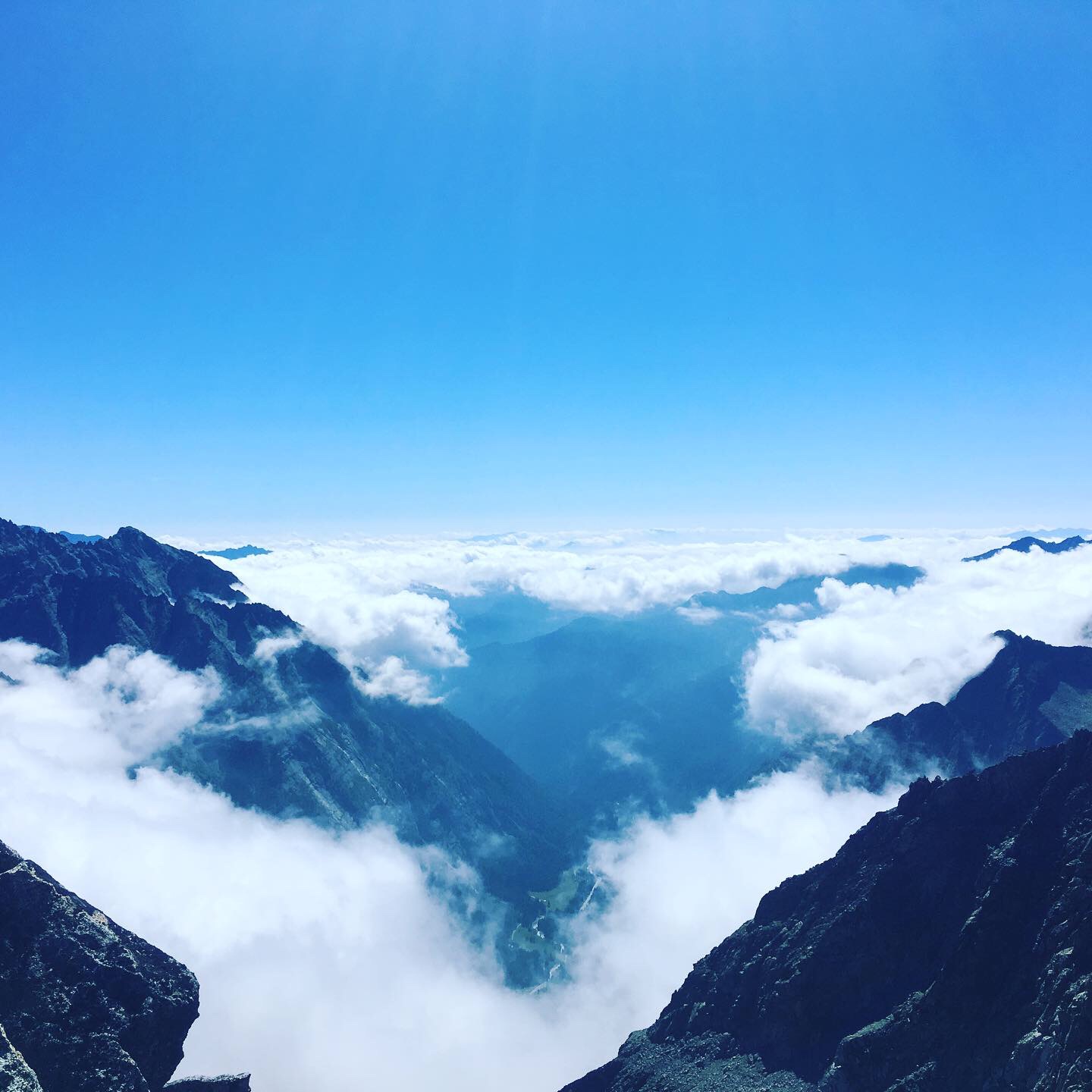
A cloud inversion from just above the zig zags.

Whilst at Rifugio Madrone, ensure to visit the wonderful glacier observatory, containing information about the nearby glaciers at the soldiers that fought upon them in WW1. There is also a war cemetery nearby, commemerating the soldiers efforts.

From Rifugio Madrone – follow the signs to Passo Presena. The path starts behind the Rifugio and is very steep at first, but fear not, it does not last long. After the first climb, you will arrive at another set of signs, here Passo Presena is not signposted. Follow the trail towards Passo del Maroccaro instead. There is a flat section for a few hundred meteres before another steep and loose climb towards Lago Scuro. Be careful with foot placement here – a slip could be very painful. The path reaches another set of signposts, follow the signs towards Passo Presena once again and enjoy the stunning views of the lake as you climb above it. A final set of signs is reached as the path traverses accross the mountain – finally climbing to Passo Presena.

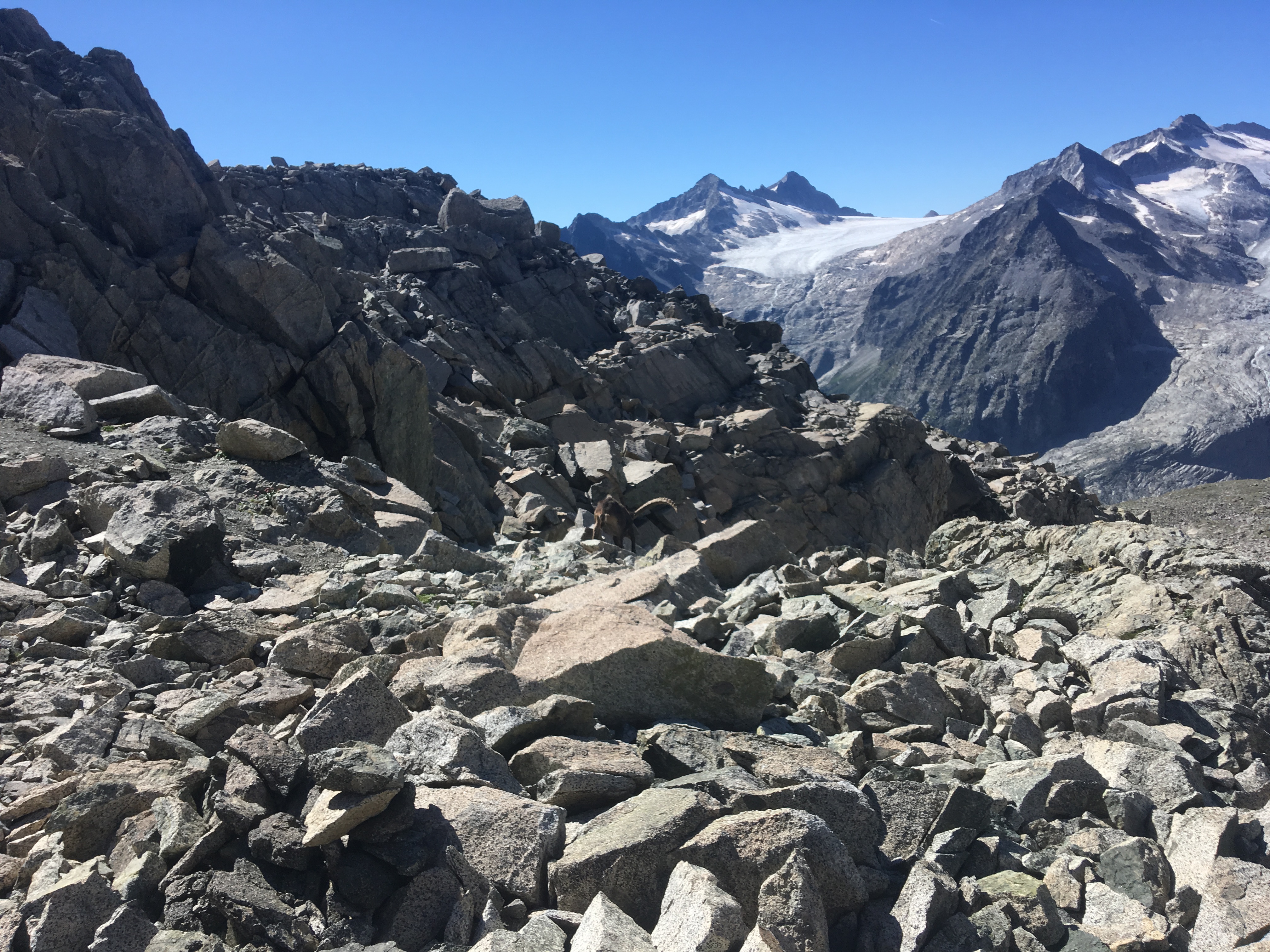
Great views accross to Pian Neve with an Alpine Ibex in the foreground.

From Passo Presena – it is extremely easy to reach Cima Presena, simply follow the ridge to the right. Stick to the crest as much as possible for a more interesting route that is left untouched by the tourists who take the cable car. At the summit cross, views of the whole region open up, making it well worth the 1500m of ascent to get here. In descent, repeat the same route.

The easy summit ridge – notice the crowds of people who took the cable car.

Despite the height gain and distance of this hike, it is a technically easy hike with easy route finding. However, above Rifugio Madrone, the path becomes quite unclear for a few hundred meters so ensure to follow the paint and cairns carefully. Nevertheless, this walk invloves spending lots of time at above 2500m, where weather can change extremely fast from sun to snow. It is essential to have proper equipment and experience before attempting this hike.

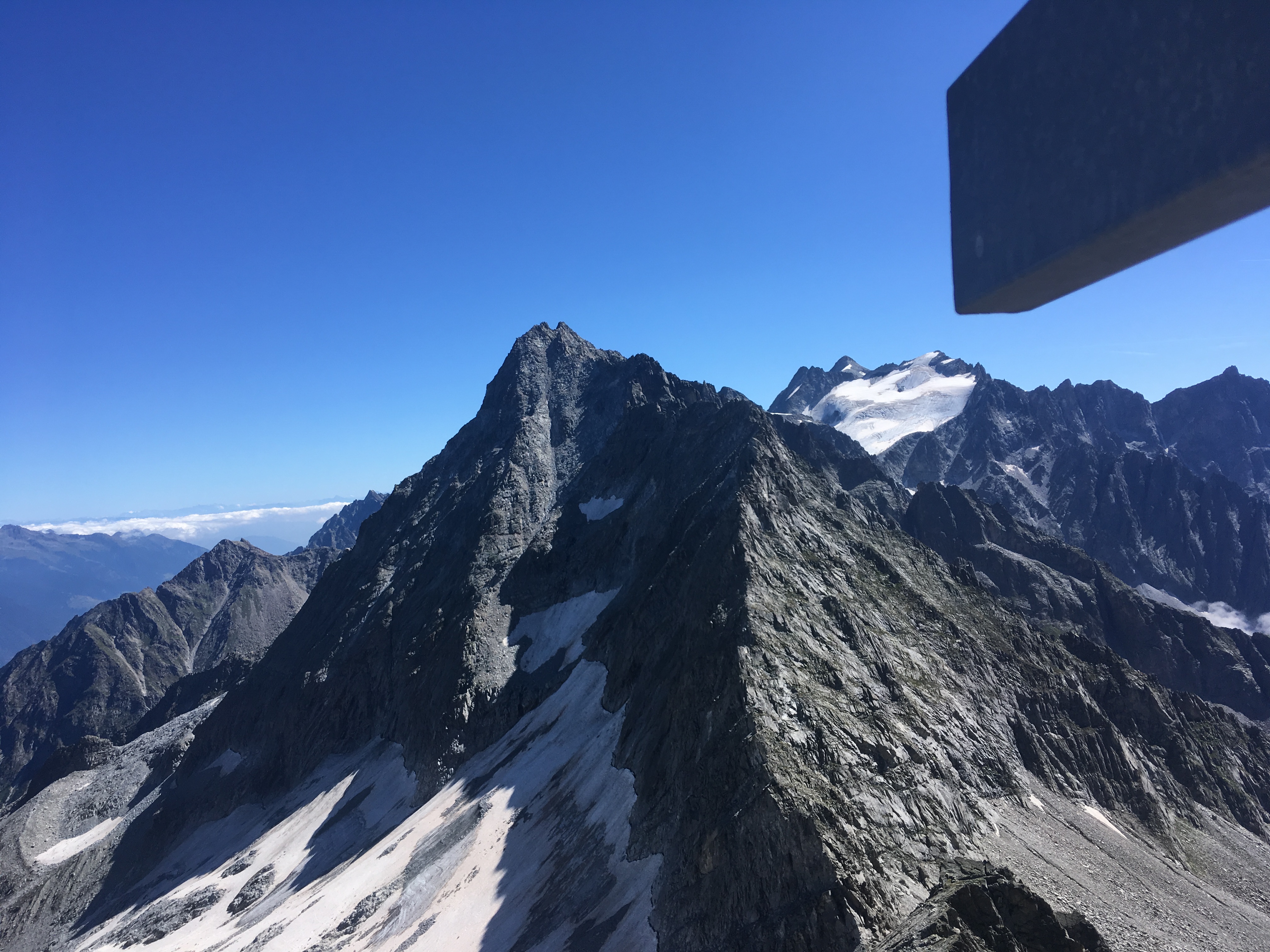
Perfect views from the summit